
The Complete Guide to Fiberglass Travel Trailer Maintenance


Quick Answer: How Do You Maintain a Fiberglass Travel Trailer?
To maintain a fiberglass travel trailer, wash it at least once a month, use a safe soap designed for gel coat or ceramic-coated surfaces, dry it after washing, and remove bugs, road grime, and black streaks before they bond to the surface.
Avoid dish soap, degreasers, abrasive brushes, magic erasers on glossy gel coat, and harsh cleaners. If the trailer starts looking dull, chalky, yellowed, or hard to clean, the gel coat may already be oxidizing and should be inspected before the damage gets worse.
Why Fiberglass Trailer Maintenance Matters
Fiberglass travel trailers are built to last, but the exterior gel coat still needs regular care. When gel coat is healthy, the trailer looks bright, smooth, glossy, and easy to wash. When it starts to break down, the surface can become dull, chalky, yellowed, stained, and harder to clean.
The good news is that fiberglass trailer maintenance does not have to be complicated. The main priorities are simple: wash the trailer regularly, use safe products, dry it after washing, remove bugs and road grime early, and keep the gel coat protected from UV exposure.
This guide explains how to maintain a fiberglass travel trailer, how to spot early oxidation, when wax may not be enough, and when ceramic coating is worth considering.
Most molded fiberglass trailers, including Oliver, Escape, Bigfoot, Casita, and Scamp models, have an exterior gel coat. That gel coat gives the trailer its shine and helps protect the fiberglass underneath.
When gel coat is healthy, the trailer looks bright, smooth, and glossy. When it starts to break down, you may notice dullness, chalkiness, yellowing, rough texture, black streak staining, water spots, poor reflection, or a surface that feels harder to wash.
The biggest threat is UV exposure. Sun, heat, rain, bugs, road grime, salt, and improper cleaners can all wear down the surface over time. The longer the trailer sits unprotected, the harder it becomes to restore.
That is why maintenance matters. It is much easier to protect healthy gel coat than to correct heavy oxidation later.
What Is Gel Coat Oxidation?
Oxidation happens when UV exposure and environmental wear break down the outer layer of the gel coat. Early oxidation may only look like mild dullness. As it gets worse, the surface can become chalky, yellowed, faded, and rough to the touch.
The frustrating part is that oxidation often accelerates once it starts. A trailer may look only slightly dull one season and then look dramatically worse after another year outdoors, especially in hot southern climates.
Common signs of oxidation include:
The trailer still looks dull after washing.
The surface feels dry, rough, chalky, or grabby.
Reflections look blurry or disappear.
White gel coat appears yellowed.
Wax does not seem to last.
Black streaks become harder to remove.
Catching oxidation early usually means less correction work and better final results.
How to Check Your Fiberglass Trailer for Oxidation
You can start with a few simple tests at home.
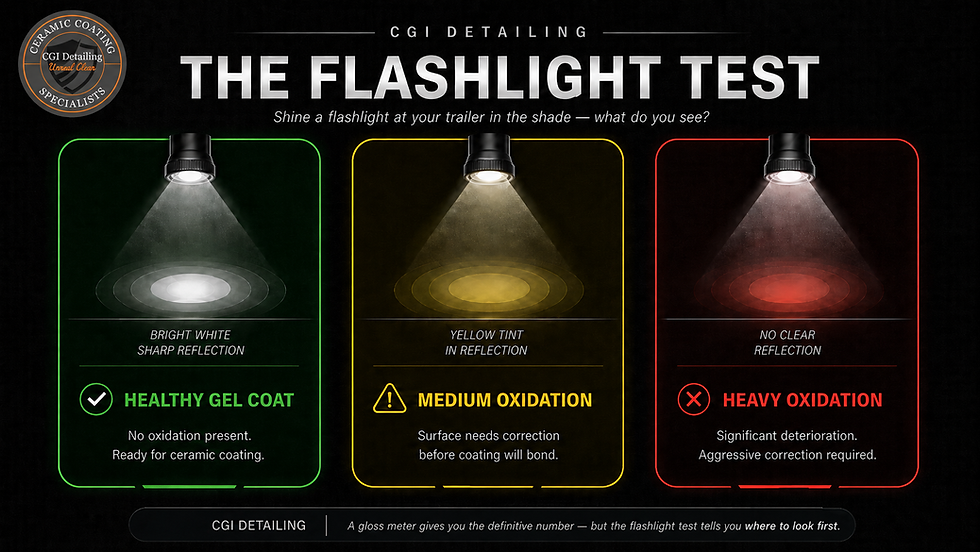
The Flashlight Test
At night or in a shaded area, shine a bright flashlight directly at the trailer’s surface.
A bright white, sharp reflection usually means the gel coat is still healthy. A yellow tint in the reflection may mean medium oxidation is present. If there is no clear reflection, heavy oxidation may be present.
This is not a perfect test, but it is a helpful way to see whether the gel coat is still reflecting clearly.
The Touch Test
After washing, gently run your clean hand across the surface. Healthy gel coat should feel smooth. Oxidized or contaminated gel coat may feel rough, dry, or grabby.
Gloss Meter Readings
At CGI Detailing, we use a gloss meter to give customers a more objective reading of their gel coat condition.
As a general guide:
80+: Healthy surface, usually ready for standard polish and coating.
65-79: Mild dullness, often needing light correction or brightening.
40-64: Medium to heavy oxidation, usually needing more significant correction.
Below 40: Very heavy oxidation, often requiring aggressive multi-step correction.
A reading is only part of the story. Two trailers with the same reading may need different work depending on age, storage, climate, and how long the oxidation has been developing.
Monthly Fiberglass Trailer Maintenance Checklist
A simple monthly routine prevents many long-term problems.
Recommended maintenance schedule:
Rinse off bugs and road grime after travel.
Wash the full exterior at least once per month.
Dry the trailer after every wash.
Inspect for black streaks every wash.
Check the roof and high-sun areas monthly.
Remove bugs from the front cap after travel.
Apply ceramic booster every 3-4 months if the trailer is coated.
Schedule professional inspection or maintenance annually or as needed.
Trailers stored outdoors, especially in hot or coastal climates, usually need more frequent washing than trailers stored indoors.
How to Wash a Fiberglass Travel Trailer

Washing a fiberglass trailer is not just about making it look clean. The goal is to remove dirt safely without scratching the surface or stripping protection.
1. Rinse First
Start with a thorough rinse to remove loose dirt and grit. Pay attention to the front cap, lower panels, roofline, rear bumper area, and around windows, lights, and trim.
2. Use the Right Soap
Use a soap that is safe for fiberglass gel coat and ceramic-coated surfaces. For coated trailers, use a ceramic-safe soap that will not strip the coating or leave behind heavy residue.
Avoid:
Dawn dish soap
Degreasers
Strong all-purpose cleaners
Abrasive cleaners
Stiff brushes
Magic erasers on glossy gel coat
Dish soap and degreasers may make the trailer look clean in the moment, but they can weaken protection and dry out the surface over time.
3. Wash From Top to Bottom
Work from the top down using a soft wash mitt or soft brush made for delicate exterior surfaces. Do not scrub aggressively. If a stain will not come off with normal washing, it needs the right cleaner or professional attention, not more pressure.
4. Remove Bugs Early
Bugs, tar, and road grime get harder to remove the longer they sit. The front of a travel trailer takes a beating during summer travel, so clean the front cap as soon as practical after a trip.
5. Dry the Trailer
Drying helps prevent water spots. Use clean microfiber drying towels or a safe blower method. Pay attention to places where water hides, like windows, trim, lights, handles, and roof accessories.
How to Prevent Black Streaks
Black streaks usually come from dirty water running down the trailer from the roof, windows, trim, awnings, lights, and other exterior parts.
To reduce black streaks:
Keep the roof clean.
Wash the trailer regularly.
Remove streaks early.
Do not let dirty water dry on the surface.
Maintain wax, sealant, or ceramic coating protection.
Inspect roof edges, trim, and seals.
A protected surface will not stop dirty water from running down the trailer, but it usually makes streaks easier to remove before they stain.
Wax vs. Ceramic Coating for Fiberglass Trailers
Wax can provide temporary gloss and protection, but it does not last very long on fiberglass gel coat. Depending on climate and storage, wax may last only one to three months. Heat, sun, rain, road grime, and washing all shorten its life.
Ceramic coating is a longer-term protection option. When the surface is properly cleaned, polished, and prepared, a professional ceramic coating bonds to the gel coat and helps protect against UV exposure, oxidation, bugs, black streaks, road grime, water spots, and salt.
Ceramic coating can help with:
Easier washing
Better gloss retention
Reduced staining
Easier bug removal
Easier black streak cleanup
Longer-term UV protection
Less frequent waxing
Ceramic coating is not magic, and it does not mean the trailer never needs to be washed. But for owners who want easier maintenance and better long-term protection, it is often a better option than repeatedly waxing the trailer every few months.

When Ceramic Coating Is Worth It
Ceramic coating is worth considering if:
Your trailer is new or still in good condition.
You store the trailer outdoors.
You travel often.
You live in a hot or sunny climate.
You want easier washing.
You want to reduce oxidation risk.
You want to protect resale value.
You do not want to wax several times per year.
The best time to coat a fiberglass trailer is before oxidation becomes severe. Protecting healthy gel coat is much easier than restoring neglected gel coat.
When Ceramic Coating May Not Be the First Step
Ceramic coating should not be applied over oxidation, staining, or contamination. The trailer needs to be washed, decontaminated, polished, and properly prepared first.
If the gel coat is heavily oxidized, correction work is needed before coating. If the trailer is severely neglected or the gel coat is too far gone, polishing may not fully restore it. In some cases, repainting or re-gel coating may be the better option.
A professional inspection can help determine whether the trailer needs a standard polish and coating, oxidation correction, or a different repair approach.
What Professional Ceramic Coating Preparation Includes
A proper fiberglass trailer coating process is much more than washing the trailer and applying a product.
At CGI Detailing, the process typically includes:
Gloss meter readings to assess gel coat condition
Pre-rinse and bug, tar, and iron removal
Full exterior hand wash
Clay bar treatment
Drying
Multi-step buffing and polishing as needed
Alcohol wipe-down to remove polishing oils
Professional ceramic coating application
Final inspection
The preparation is what allows the coating to bond properly and perform as intended. This is also why professional coating work costs more than a basic wash or wax. Most of the value is in the correction and preparation before the coating ever touches the trailer.
Maintenance for Ceramic-Coated Trailers
A ceramic-coated trailer is easier to maintain, but it still needs regular care.
For best results:
Wash at least once per month.
Use ceramic-safe soap.
Dry after every wash.
Apply a ceramic booster every 3-4 months.
Remove bugs and road grime quickly.
Avoid dish soap, degreasers, and harsh cleaners.
Do not skip washing for months at a time.
For owners who want help maintaining the coating, CGI Detailing offers an annual Ceramic Shield Maintenance Plan. This plan allows CGI to inspect, refresh, and maintain the coating so the trailer stays protected and easier to clean over time.
Common Fiberglass Trailer Maintenance Mistakes
Waiting Too Long to Address Oxidation
Oxidation gets harder to correct the longer it sits. If your trailer starts looking dull or chalky, do not ignore it for another season.
Using Harsh Cleaners
Degreasers, dish soap, and aggressive cleaners can weaken protection and dry out the surface.
Scrubbing Stains Too Aggressively
If a stain will not wash off normally, more pressure is not always the answer. Aggressive scrubbing can damage the surface.
Skipping Drying
Letting water dry on the trailer can leave water spots, especially in hot weather or hard-water areas.
Forgetting the Roof
A dirty roof contributes to black streaks down the sides. The roof may not be as visible, but it still affects the rest of the trailer.
Thinking Ceramic Coating Means No Maintenance
Ceramic coating reduces maintenance. It does not eliminate it. Monthly washing still matters.
How to Know If Your Trailer Needs Professional Help
You may need professional inspection, polishing, or ceramic coating if:
The trailer looks dull after washing.
The surface feels chalky.
Black streaks are harder to remove.
Wax no longer lasts.
Reflections look cloudy.
The gel coat looks yellowed.
Water no longer beads or sheets well.
The trailer has medium or heavy oxidation.
You want to protect a new trailer before UV damage begins.
It is also smart to get help before visible damage begins. Newer trailers and well-kept trailers are often the best candidates for protection because the gel coat is easier to preserve while it is still healthy.
Final Takeaway
Fiberglass trailer maintenance does not have to be complicated. Wash the trailer regularly, use safe products, dry it after washing, remove bugs and black streaks early, and keep the gel coat protected from UV exposure.
If the surface is already dull, chalky, yellowed, or hard to clean, have it inspected before another season of sun and weather makes the correction more difficult.
CGI Detailing can inspect your trailer’s gel coat, recommend correction or ceramic coating when needed, and help maintain coated trailers with the annual Ceramic Shield Maintenance Plan.

Comments